


Sacramento warehouse workers are getting hurt more than most people realize, and many of them are leaving money on the table because of mistakes made before they ever file a claim. If you work in a Sacramento warehouse and you've been pushing through back pain, shoulder soreness, or constant knee aches, you may already have a workers' compensation case. The problem is, Sacramento warehouse injuries often go unreported for months, and by the time workers finally seek help, their case is already harder to win and their payout is already at risk.
The Sacramento Warehouse Boom Nobody's Talking About
Sacramento and its surrounding areas have quietly become one of Northern California's biggest warehousing hubs. Beyond the Amazon and Tesla facilities that get all the press, the region is home to major distribution centers for companies like Wayfair, Living Spaces, and dozens of other shippings and receiving operations spread across the Central Valley and the greater Sacramento metro.
That means tens of thousands of workers showing up every day to move freight, operate forklifts, load and unload trucks, and fulfill orders, often under intense pressure to hit productivity metrics. These aren't casual jobs. The pace is relentless, the physical demands are extreme, and the risk of injury is one of the highest of any industry.
Why Warehouse Workers Get Hurt So Often
It comes down to the nature of the work. Warehouse jobs require constant heavy lifting, repetitive motion, awkward bending, and long hours on your feet, sometimes 10 to 12 hours a shift, multiple days a week. Your body isn'tbuilt to sustain that kind of stress indefinitely.
The most common injuries workers' comp attorneys see from Sacramento warehouse workers include:
- Back injuries: herniated discs, lumbar strain, spinal damage from repeated lifting
- Shoulder injuries: torn rotator cuffs, labrum tears from overhead reaching and carrying
- Knee injuries: cartilage damage, ligament strain from constant squatting and climbing
- Wrist and hand injuries: carpal tunnel, tendonitis from repetitive gripping and scanning
- Neck injuries: strain from awkward head positioning during picking and packing tasks
- Forklift and machinery accidents: crush injuries, falls, and collisions
But here's what most workers don't expect: not every injury happens in a single dramatic moment. Many of the most serious warehouse injuries buildslowly, over weeks, months, or even years of the same repetitive motionswearing your body down.
Cumulative Trauma: The Warehouse Injury That Sneaks Up on You

One of the most misunderstood types of Sacramento warehouse injuries is what California workers' compensation law calls cumulative trauma. This isn't the kind of injury where you feel your back pop lifting a heavy box and know immediately something went wrong. Cumulative trauma is the wear and tear that accumulates over time, the straw that finally breaks the camel's back.
Think about it this way: your joints are like tires on a car. The more miles you put on them under extreme conditions, the faster they wear down. Working at an Amazon fulfillment center isn't like normal driving, it's like flooring it at 170 miles per hour, day after day.
The challenge with cumulative trauma is that it often doesn't feel like a "real" injury at first. Workers rationalize it: "Maybe it's my mattress." "I just need to stretch more." "It'll go away on its own." But months pass, the pain gets worse, and by the time they finally seek help, the damage is more severe and the case is harder to prove.
Cumulative trauma cases are also among the most frequently denied byinsurance companies, precisely because there's often no single incident, no single date, no clear paper trail. Insurance adjusters love ambiguity. An experienced workers' comp attorney doesn't.
The Costly Mistakes That Lower Your Settlement
Sacramento warehouse workers often hurt their own cases before they evenrealize they have one. Here are the most common mistakes:
Waiting too long to report the injury. California has strict deadlines for filingworkers' compensation claims. The longer you wait, the more the insurancecompany will argue that your injury happened somewhere else or that it isn'twork-related.
Not reporting at all because you're afraid. Fear of losing your job, getting fewer hours, or not being believed keeps many workers silent. But staying quiet doesn't protect your job, it just protects the insurance company's bottom line.
Going to your personal doctor instead of a workers' comp doctor. In California, your employer has the right to direct your medical care for the first30 days after you report your injury. If you haven't pre-designated a personal physician, you need to go through proper workers' comp channels or yourmedical treatment may not be covered.
Trusting that your employer's insurance is on your side. The insurancecompany works for the employer, not for you. Their job is to minimize yourpayout. Period.
Ignoring the signs of cumulative trauma. If your daily aches and pains are being caused by your job duties, you may have a cumulative trauma claim, even if nothing "happened" on a specific date. Don't assume that because there was no single incident, you have no case.

If you're a warehouse worker in Sacramento and you've been pushing through pain, you owe it to yourself to find out what your options are. A free consultation takes 30 minutes. It doesn't cost you anything. And it could be the difference between a full settlement and walking away with nothing.
👉 Fill out this form and we'll call you right away
Our team at Pacific Workers speaks with injured workers every day. We'llanswer your questions, explain your rights, and tell you honestly whether you have a case, at no cost to you.
OSHA Rights You Probably Don't Know You Have
California warehouse workers have legal protections under OSHA(Occupational Safety and Health Administration) that many employers don'tadvertise. OSHA regulations govern everything from how much weight youcan be required to lift to mandatory rest periods and safety equipmentrequirements.
If your supervisor is pushing you to work in conditions you feel are unsafe, or pressuring you to skip breaks, skip safety equipment, or ignore pain, that may constitute a violation of OSHA's safety orders. Your employer is legally required to post workers' compensation notices in visible areas of your workplace. If you've never seen one, that alone is worth noting.
And if your employer tells you that you don't have workers' comp coverage, or that you're a "contractor" so it doesn't apply to you, get a free legal consultation immediately. Every California employer with employees is legally required to carry workers' compensation insurance. Misclassifying employees as contractors to avoid that obligation is illegal.
What Happens When You Don't Address Warehouse Injuries Early
The pattern plays out the same way again and again. A warehouse worker starts feeling pain. They minimize it, work through it, and tell themselves it'llget better. Months go by. The injury worsens. Eventually they can't work anymore, and now they're fighting a denied claim without income, struggling to pay rent, put food on the table, and care for their family.
The financial and emotional toll is devastating. Workers who delay treatmentoften end up with permanent damage that prevents them from ever returningto their career in the industry. In some cases, injuries that could have beenmanaged with early treatment become career-ending.
There's also a strategic element that workers rarely consider. Sometimes, filing a cumulative trauma claim is a decision that needs to be timed carefully. For example, if you're close to vesting your retirement or qualifying for important employment benefits. That's another reason why talking to an attorney early gives you options rather than leaving you reactive when things hit a breaking point.
🎧 Want to Go Deeper on This Topic?
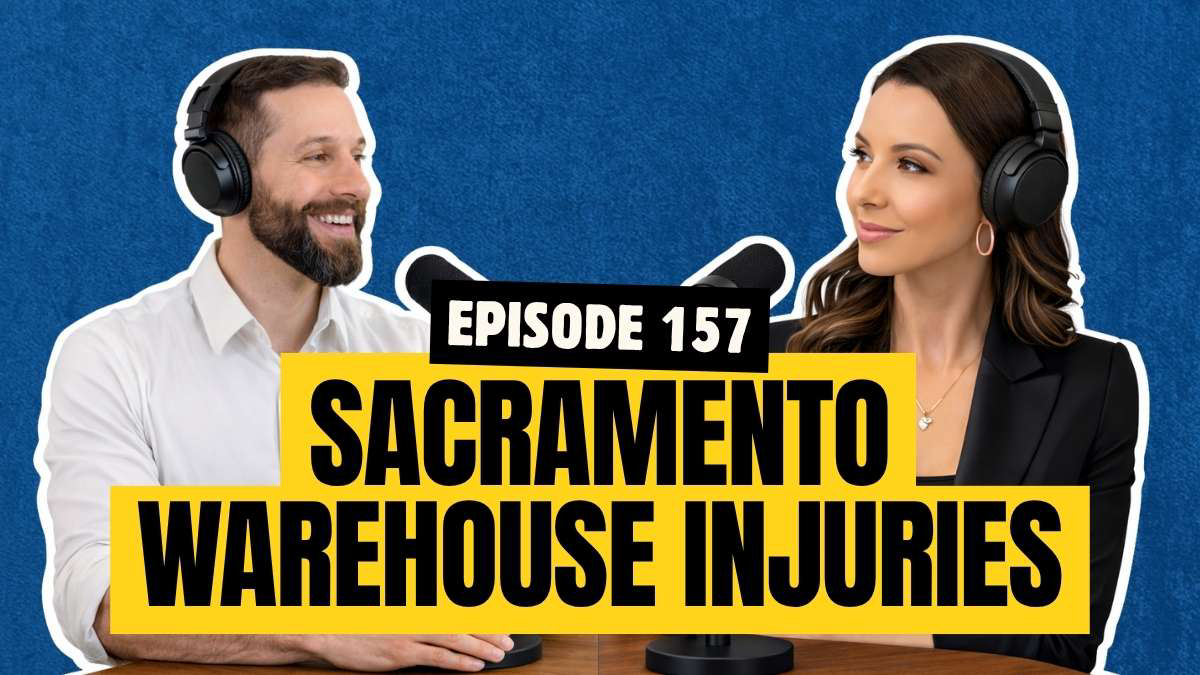
We covered Sacramento warehouse injuries and cumulative trauma in detail on a recent episode of Work Comp Talk. If you want to hear real attorney insight on how these cases work and what injured workers get wrong, go check it out on YouTube.
👉 Watch the full episode on the Work Comp Talk YouTube channel
You Don't Have to Navigate This Alone
California's workers' compensation system is complicated. Insurance companies have entire legal teams working to reduce your payout. You deserve someone in your corner who knows the system and who doesn'tcharge you anything unless you win.
If you're a Sacramento warehouse worker dealing with a back injury, shoulder pain, knee problems, or any other work-related condition, don't guess, don'twait. Don't let fear keep you from finding out what you're entitled to.
Call us now at 800-606-6999 for a FREE consultation. Or fill out the form below and we'll call you today.
Frequently Asked Questions
1. How do I know if my pain is a workers' comp injury or just normalsoreness? If your pain is related to the physical demands of your job (lifting, bending, reaching, operating machinery) and it's affecting your ability to work or your daily life, it's worth talking to a workers' comp attorney. You don't need a formal diagnosis to consult with someone. A free consultation can help you figure out whether what you're experiencing qualifies as a work injury under California law.
2. Can I file a workers' comp claim for cumulative trauma if there was no single accident? Yes. California workers' compensation law specificallyrecognizes cumulative trauma as a compensable injury. You don't need a single incident date. What matters is that your job duties, over time, contributed to your injury or condition.
3. What if my employer says I'm a contractor, not an employee? This is a common and often illegal tactic. In California, there are strict legal tests for what qualifies as independent contractor status. If your employer controls how, when, and where you work, you may legally be an employee, regardless of what your paperwork says. Consult with an attorney to find out your actualstatus.
4. What if the company I worked for has closed down or gone out ofbusiness? Your claim is typically filed against the employer's insurancecompany, not the employer directly. Even if a business closes, the insurancepolicy that was active during your employment remains valid. And if theinsurance company itself becomes insolvent, California has a guarantee fundspecifically designed to protect injured workers in that situation.
5. How much does it cost to hire a workers' comp attorney in California? Nothing upfront. Workers' compensation attorneys in California work on contingency, meaning they only get paid if you do, and their fees are regulated by the state. Your initial consultation should always be completely free.
About the Author
 Bilal Kassem President and Co-founder
Bilal Kassem is the co-founder of Pacific Workers and a nominee for Applicant Attorney of the Year. With a deep-rooted passion for helping injured workers, Bilal leads with empathy and empowers his team to deliver world-class service from the very first interaction.
Bilal earned his J.D. from California Western School of Law and has built his career entirely around fighting for injured workers across California. Recognized by the National Trial Lawyers as a Top 40 Under 40 attorney, he has represented workers in some of the most complex and frequently denied cases in the workers' comp system — including cumulative trauma claims like the warehouse injuries covered in this article. As Managing Director of Litigation at Pacific Workers, Bilal has seen firsthand how delayed reporting, insurance denials, and employer pressure cost workers the settlements they deserve.
Disclaimer: This article provides general information and is not legal advice. Every workers' compensation case is different.