


Updated on February, 2026
As Amazon continues to expand its fulfillment center operations, the health and safety of its warehouse personnel remain a growing concern. While the company has invested in safety programs and technology, many workers still experience repetitive strain injuries, back pain, joint issues, and long-term physical wear.
For many employees, the real question isn’t whether safety policies exist.
It’s: Are they actually working in real life?
When productivity targets are high and shifts are long, even strong safety rules can break down. In this article, we take a practical look at Amazon’s workplace safety in 2026: what’s improved, where risks remain, and what injured workers should know if something goes wrong.
The Short Answer (Plain English)
Amazon has expanded its safety systems in recent years, including training, ergonomic tools, and monitoring technology. But in 2026, many injuries still happen due to workload pressure, repetitive motion, and inconsistent enforcement.
Safety depends not just on policy but on how those policies are applied day to day.
If you’re injured, understanding your rights early makes the difference between getting support and getting stuck.
Who This Applies To
This matters if you:
- Work in an Amazon fulfillment or distribution center
- Perform repetitive picking, packing, or lifting tasks
- Experience pain, numbness, or chronic discomfort
- Feel pressured to meet speed targets
- Have been injured or worry you might be
If your job pushes your body daily, safety policies affect you directly.
1. Amazon’s Safety Protocols in 2026: What’s in Place Today
In 2026, Amazon continues to promote workplace safety through structured programs, including:
- Mandatory safety training
- Injury-prevention education
- Equipment-handling procedures
- Ergonomic workstation design
- Stretching and warm-up routines
New employees still receive onboarding focused on hazard awareness and injury prevention. Ongoing training is also provided when new tools or systems are introduced.
Ergonomics remains a major focus. Adjustable workstations, mechanical assists, and required breaks are meant to reduce strain. However, enforcement can vary between locations and supervisors.
This means some workers experience strong safety support while others feel pushed to prioritize speed over health.
2. The Reality Behind Workplace Injuries in 2026

Despite formal safety programs, injuries still occur in Amazon warehouses.
Common incidents include:
- Back and shoulder strain
- Wrist and elbow injuries
- Knee problems
- Slips and falls
- Equipment-related accidents
Contributing factors often include:
- Inconsistent supervision
- High performance quotas
- Equipment maintenance delays
- Crowded work areas
- Fatigue during peak seasons
During holidays and major sales events, injury rates often rise. Temporary staff, extended shifts, and faster pace increase risk.
When volume rises, safety is often the first thing tested.
3. Legal Rights and Support for Injured Amazon Workers in 2026
Workers’ compensation remains a core protection for injured Amazon employees.
If you’re hurt at work, you generally have the right to:
- Medical treatment
- Temporary disability payments
- Permanent disability benefits (if applicable)
- Job protections
- Claim review and appeal rights
To protect yourself:
- Report injuries immediately
- Get medical attention
- Keep copies of reports
- Follow claim procedures
- Track deadlines
Many workers struggle because they don’t realize how technical the system is. Missing one step can delay or reduce benefits.
Legal guidance often becomes critical when claims are questioned, delayed, or denied.
4. Proactive Safety Measures and Technology in 2026
Looking forward, Amazon continues to develop innovative approaches to improve workplace safety.
In 2026, this includes:
- AI-based motion analysis
- Wearable safety devices
- Predictive risk modeling
- Real-time monitoring systems
- Automated workload tracking
These tools aim to detect unsafe movements and prevent injuries before they happen.
Employee engagement is also emphasized through:
- Safety feedback sessions
- Anonymous reporting systems
- Role-specific training
- Peer safety programs
When technology and worker input align, prevention improves. When speed overrides both, injuries rise.
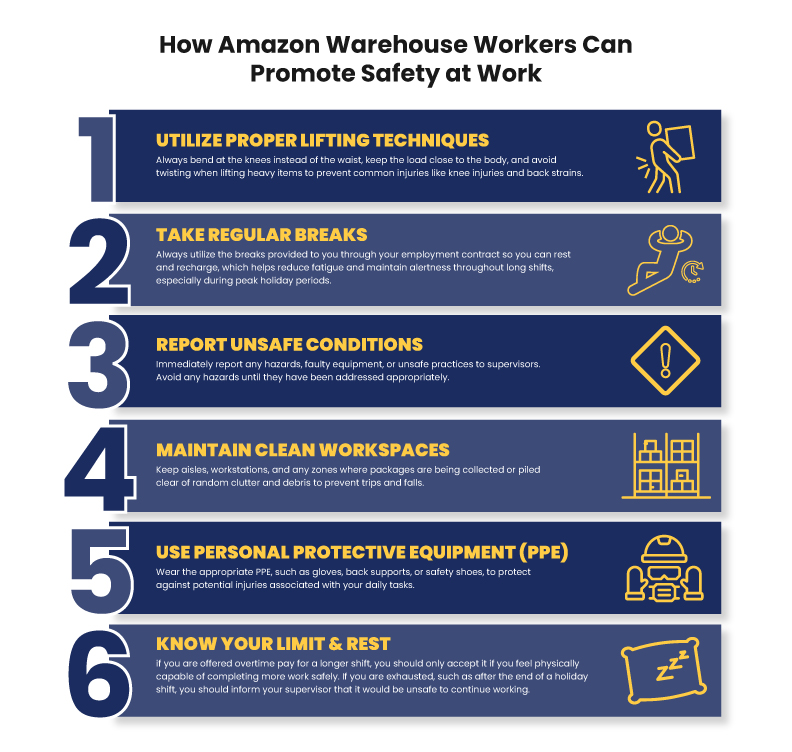
How Amazon Warehouse Workers Can Promote Safety at Work
Workers can reduce risk by practicing daily safety habits:
✔ Use Proper Lifting Techniques
Bend your knees, keep loads close, and avoid twisting. Poor lifting is one of the main causes of chronic injury.
✔ Take Your Breaks
Breaks aren’t optional, they’re recovery time. Skipping them increases accident risk.
✔ Report Unsafe Conditions
Faulty equipment, spills, blocked aisles, and unstable loads should be reported immediately.
✔ Keep Workspaces Clear
Clutter leads to trips, falls, and collisions.
✔ Use Protective Equipment
Wear gloves, supports, and safety shoes when required.
✔ Know Your Limits
Overtime should only be accepted if you’re physically able. Fatigue increases mistakes and injuries.
Protecting your body is not being “difficult.” It’s being responsible.
Common Mistakes That Lead to Serious Injuries
Many workers unintentionally put themselves at risk by:
- Ignoring early pain
- Working through injuries
- Skipping medical visits
- Avoiding reports to “not cause trouble”
- Trusting injuries will “go away”
These choices often turn small issues into permanent damage.
The system does not protect workers who stay silent.
When to Get Legal Help
You should consider legal guidance if:
- Your injury isn’t improving
- Your claim is delayed
- Benefits are reduced
- Treatment is denied
- You feel pressured to return too soon
At that point, waiting rarely helps.
Conclusion: Is Amazon Doing Enough in 2026?
Amazon continues to invest in safety training, ergonomics, and technology. These efforts show progress. But injuries during peak operations and high-pressure periods remain a concern.
The challenge is not creating safety policies.
It’s making sure they survive real-world conditions.
True workplace safety means workers return home healthy every day, not just on paper.
The question remains: Is enough being done?
Staying informed, speaking up, and knowing your rights are essential steps toward safer workplaces in 2026 and beyond.
If you’ve been injured at an Amazon warehouse and aren’t sure what to do next, getting guidance early can protect both your health and your future.
If you’ve been injured while working at an Amazon warehouse and are unsure about your medical care, benefits, or next steps, you don’t have to figure this out alone.
Visit www.pacificworkers.com or call 800-606-6999 to schedule your free consultation and get clear guidance before delays or mistakes affect your health and financial future.
About the Author
 Bilal Kassem President and Co-founder
Bilal Kassem is the President and Co-Founder of Pacific Workers and a nominee for Applicant Attorney of the Year. With years of experience representing injured workers across California, Bilal has helped thousands of warehouse and logistics employees navigate complex workers’ compensation claims involving repetitive injuries, denied treatment, and delayed benefits.
Known for his people-first approach, Bilal leads his team with empathy, transparency, and a commitment to protecting workers from being taken advantage of by insurance companies. His focus on education and advocacy empowers injured employees to understand their rights, avoid costly mistakes, and secure the medical care and compensation they deserve.